Can eSIM Replace SIM Cards Completely? (2026 Reality Check)
Physical SIM cards have been around for 30+ years. With Apple already going eSIM-only, is the end of physical SIMs really here? Let's look at the facts.

The Short Answer: Yes, But Not Overnight
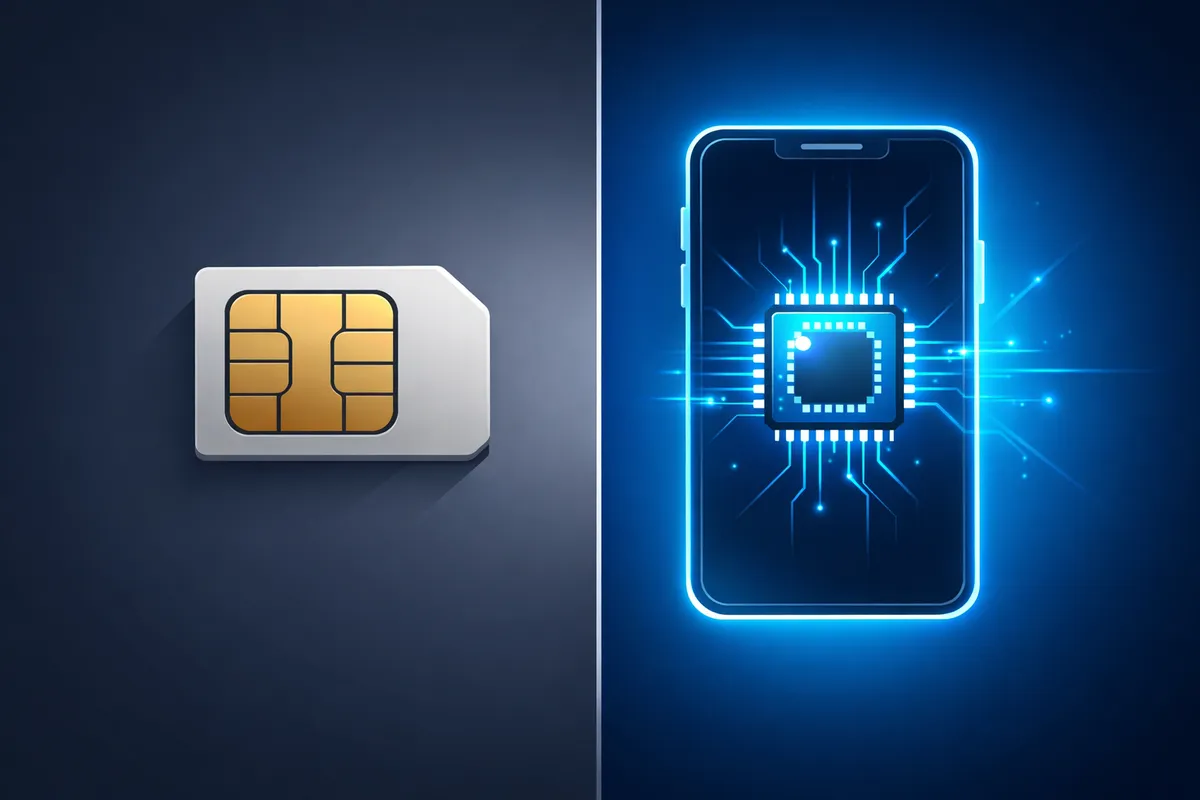
eSIM technology will eventually replace physical SIM cards — but the transition will take years, not months. Apple's decision to make the iPhone 14 (US model) eSIM-only in 2022 was a watershed moment, and the industry has been accelerating since.
By 2026, over 70% of smartphones shipped globally are eSIM-capable. But "capable" and "exclusively eSIM" are very different things.
Where We Stand in 2026
Countries Leading eSIM Adoption
- United States: Apple sells eSIM-only iPhones; all major carriers fully support eSIM
- United Kingdom: All major networks support eSIM; growing eSIM-only device availability
- South Korea: One of the highest eSIM penetration rates globally
- Germany: Strong regulatory push for eSIM support from all carriers
- Japan: All three major carriers offer full eSIM support
Countries Lagging Behind
- India: Only recently mandated eSIM support; physical SIM still dominant
- Parts of Africa: Infrastructure and device affordability limit eSIM adoption
- Southeast Asia: Mixed adoption; some countries have full support, others don't
Why Physical SIMs Haven't Disappeared Yet
1. Device Affordability
Budget smartphones — which make up the majority of global sales — often don't include eSIM capability. The eUICC chip adds cost that budget manufacturers avoid.
2. Carrier Resistance
Some carriers are slow to adopt eSIM because:
- Physical SIM distribution is a customer touchpoint (retail stores)
- Legacy billing systems aren't built for remote provisioning
- Fear of easier carrier switching reducing customer retention
3. Regulatory Barriers
Not all countries have regulations requiring carriers to support eSIM. In some markets, carriers can still refuse to provision eSIM profiles.
4. Consumer Awareness
Many consumers don't know what an eSIM is or how it works. Education is a significant barrier to adoption.
The Advantages Driving Replacement
Despite these barriers, the advantages of eSIM are compelling enough to drive eventual replacement:
For Consumers
- Instant activation: No waiting for physical card delivery
- Multi-profile support: Store 5-10 carrier profiles on one device
- Better for travelers: Buy data plans before you land
- Dual SIM flexibility: Use both eSIM and physical SIM during transition
For Device Manufacturers
- More internal space: No SIM tray means room for bigger batteries
- Better waterproofing: One fewer opening in the device
- Thinner designs: No SIM slot means slimmer phones
- Reduced support costs: No broken SIM trays or stuck SIMs
For Carriers
- Lower costs: No physical SIM production and distribution
- Faster onboarding: Remote activation reduces retail overhead
- IoT scaling: eSIM enables massive IoT deployments
Timeline: When Will Physical SIMs Disappear?
Based on current industry trends, here's a realistic timeline:
| Period | Milestone | |--------|-----------| | 2024-2025 | All flagship phones support eSIM; Apple US remains eSIM-only | | 2026-2027 | eSIM-only becomes standard for flagship phones globally | | 2028-2029 | Mid-range phones start going eSIM-only | | 2030-2032 | Physical SIM slots largely phased out in developed markets | | 2033+ | Physical SIMs become niche/legacy in most markets |
What This Means for You Right Now
Even if you're not ready to go fully eSIM, here's what you should do:
- Check if your phone supports eSIM: See the full compatibility list
- Try an eSIM for travel: Get a travel eSIM from Teraroma while keeping your physical SIM for your home number
- Learn the basics: Understand how to install an eSIM so you're ready when you need one
The Bottom Line
Physical SIM cards are not dying overnight, but they are on a clear path to obsolescence. The question isn't "if" but "when." For travelers, the transition is already here — eSIM travel plans offer a dramatically better experience than hunting for physical SIM cards at airports.
The smart move? Start using eSIM for travel now, keep your physical SIM for your home plan, and be ready for the all-eSIM future that's coming.
Frequently Asked Questions
Stay in the Loop
Get the latest travel tips, eSIM guides, and exclusive deals delivered to your inbox
We respect your privacy. Unsubscribe at any time.
Related Articles

How Does eSIM Work? (Technical Breakdown Made Simple)
A clear, jargon-free breakdown of how eSIM technology actually works under the hood — from Remote SIM Provisioning to carrier profile downloads.
eSIM vs Physical SIM Card: Complete Comparison Guide 2025
A comprehensive comparison of eSIM and traditional SIM cards to help you make the right choice for your connectivity needs.